


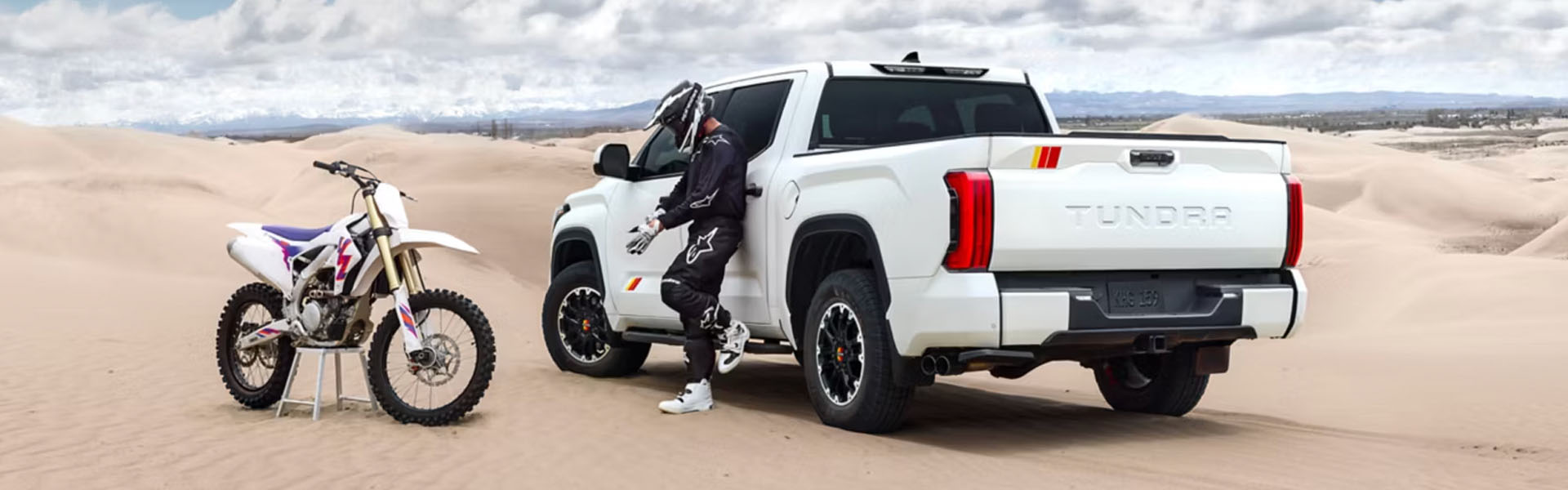
Performance, when Toyota gets it right, is never about theatrics. It’s about usable strength, mechanical intelligence, and systems that continue to work long after the novelty has worn off. For drivers in El Paso, that philosophy matters. Extreme heat, long highway stretches, elevation changes, and rugged terrain place real demands on powertrains, and Toyota’s 2026 lineup has been engineered with exactly those conditions in mind.
Toyota performance today is defined less by cylinder count and more by how effectively power is delivered, managed, and sustained. The latest engines reflect a brand that understands torque curves, thermal efficiency, and durability as deeply as outright output.
i-FORCE and i-FORCE MAX: Purpose-Built Power
Toyota’s i-FORCE turbocharged engines have quietly reshaped the way its trucks and SUVs perform. The 2.4L i-FORCE turbo, now central to models like Tacoma, produces 278 hp and 317 lbs. ft. of torque, with peak torque arriving low in the rev range. That matters in the real world. Pulling a trailer up a grade or easing over rocky terrain demands immediate response, not high-rpm drama.
The i-FORCE MAX hybrid system takes that idea further. By pairing the turbocharged engine with an electric motor, Toyota delivers 326 hp and 465 lbs. ft. of torque on the Tacoma, much of it available instantly. This is not a hybrid designed only for efficiency. It is a performance system that uses electric torque to eliminate hesitation, improve control at low speeds, and reduce strain under load. In desert conditions, where heat management and sustained output are critical, the advantage is tangible.
Hybrid Engineering with a Broader Purpose
Toyota’s fifth-generation hybrid system marks a significant evolution, particularly in vehicles like the latest RAV4. By refining the 2.5L engine and integrating a lighter, more compact electric motor, Toyota improves both efficiency and responsiveness. The electronically controlled AWD system distributes power to the rear wheels without mechanical complexity, enhancing traction on sand, gravel, and uneven surfaces while keeping weight in check.
Hybrid systems also bring a less obvious benefit in regions with elevation changes. Because part of the propulsion comes from electric power, overall performance is less affected by reduced air density, maintaining consistency across varied terrain around El Paso and beyond.
Architecture, Materials, and Mechanical Balance
Engine performance does not exist in isolation, and Toyota’s TNGA platform underpins much of what makes the 2026 lineup feel cohesive. Increased structural rigidity from high-strength steel and advanced welding techniques allows suspension systems to work more precisely and reduces unwanted flex under load.
This philosophy is evident even in Toyota’s sports cars. The GR86, with its low-mounted 2.4L Boxer engine, benefits from an inherently low center of gravity that sharpens responses without resorting to artificial stiffness. Combined with careful aerodynamic management—active grille shutters and underbody airflow control—the result is improved stability, reduced noise, and better efficiency in high-wind conditions common to the region.
Toyota Performance, Engineered for El Paso
Toyota’s latest engine technology reflects a clear understanding of how vehicles are actually used. Turbocharging for accessible torque, hybridization for control and efficiency, and structural engineering that supports long-term durability all come together in a lineup designed to perform consistently, not just impress briefly.
To experience how these technologies translate on the road, visit Fox Toyota of El Paso. Toyota’s newest powertrains are built to meet demanding conditions with confidence, delivering performance that feels measured, capable, and engineered to last.
Recent Blog Entries
- Why the 2026 Toyota RAV4 Continues to Be One of El Paso’s Most Popular SUVs
- Tacoma or Tundra: Two Great Toyota Trucks, One Important Choice
- What Makes Toyota Hybrids So Popular in El Paso, TX?
- The Toyota Safety Features You’ll Appreciate Long Before You Need Them
- Somewhere Between the Franklin Mountains and I-10, the RAV4 Hybrid Started Making Perfect Sense